
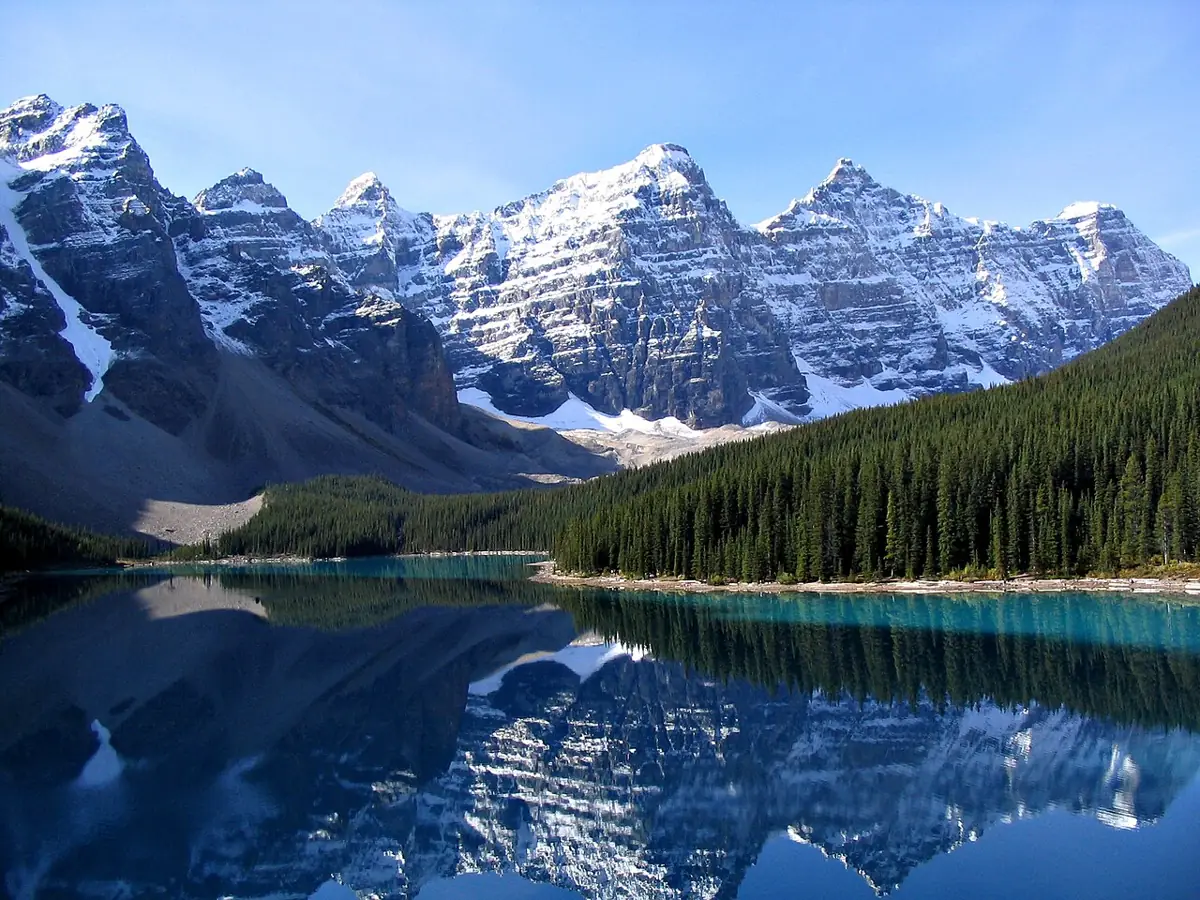
Moraine Lake, Banff National Park, Alberta, Canada. Photo credit
Gorgo. Public domain. Cropped for display.What would you like to explore?
Choose a button. Read one section at a time.
Join the free Canada chat roomFree to read. Create a free account to post.
US advisory, Level 1. Exercise normal precautionsSnapshot checked 2026-09-14
Check regional differences, local laws and safety guidance.
Snapshot checked 2026-09-14. Advisory issued 06/05/2026. This is not a live safety feed.
Read current official adviceVisas and income
All visa requirements, documents and applications in one place.Open sectionClose section
Visa sources reviewed September 27, 2026.
Canada permits qualifying remote employees to visit while working for an employer outside Canada. This uses visitor status rather than a separate digital nomad visa.
Canada visa at a glance.
Overseas remote employment under visitor status
- Income required
- Not published by the government
No separate nomad salary threshold is given on the reviewed IRCC page. This is not a zero-income requirement.
IRCC: digital nomads and visitor status ↗Source reviewed 2026-09-27 - Application fee
- Not yet verified from a government sourceResearch pending. This is not a finding that the government has no published figure.
- Processing time
- Not yet verified from a government sourceResearch pending. This is not a finding that the government has no published figure.
- Length of stay
- Up to six months under visitor status
Your admission conditions and expiry date control the actual stay.
IRCC: digital nomads and visitor status ↗Source reviewed 2026-09-27 - Renewal or path to residence
- Not yet verified from a government sourceResearch pending. This is not a finding that the government has no published figure.
Figures apply to the named route and applicant category. Visa income is not a living budget. Meeting an amount does not establish eligibility.
Compare Canada with other countries ↗What income counts for a digital nomad visa?Salary, freelance work, savings and passive income
A digital nomad visa usually asks for income from remote work. Each country sets its own rules for the type of work, where the employer or clients are based, how much you earn and the documents needed to prove it.
| Money coming in | How to describe it | Evidence to ask about |
|---|---|---|
| Pay from a remote job | Salary or wages | Contract, employer permission, pay stubs |
| Freelance or consulting fees | Money you earn from clients | Client contracts, invoices, receipts |
| Pension, Social Security, interest or dividends | Non-work income; often called passive income in relocation guides | Award letters, statements, regular payments |
| Rent or royalties | Classification depends on the activity and route | Ownership or licensing evidence, income after costs |
| Cash savings or sale proceeds | Assets or capital, not necessarily recurring income | Balances and source of funds |
A business paying you dividends does not erase the work you do to run it. These are planning descriptions; tax law uses its own definitions. Ask how mixed income and a partner’s income are assessed, whether the figure is gross or net, and which currency conversion date applies.
See the sourced income requirement for Canada in the five-fact visa card.
IN THE MOVING HANDBOOKWhich income fits your route?Could I live here on a pension, Social Security or savings?Retirement permission, healthcare and daily life
Check retirement or independent-income residence separately with the immigration authority. Read the retirement research status and next step.
What would make it worthwhile? A routine you enjoy, dependable care and connections nearby. Budget for insurance renewals, exchange-rate changes and visits to family.
What is not automatic? A visa does not by itself promise free healthcare, pension tax relief, permanent residence or permission to freelance. Confirm each benefit separately. Medicare covers foreign treatment only in limited circumstances. Check Social Security payments for your citizenship and destination before relying on them.
Medicare abroadSocial Security payments abroad
IN THE MOVING HANDBOOKBuild a retirement you would enjoy01 / CHECK YOUR WORK PLANSWhat work would this visa allow?
IRCC permits remote work for an employer outside Canada for up to six months under visitor status. This does not authorize taking a Canadian job. Confirm a different arrangement, such as freelancing, directly with IRCC. [1]
Visitor admission is temporary and does not provide permanent residence or automatic access to public healthcare. The border decision determines your authorized stay.
Test internet at the actual property, time-zone overlap, everyday transport and access to essential care before signing a long lease.
Explain the work you plan to do.
Write down who pays you, where the employer or clients are based, whether you run a business, and the work you will do while physically in Canada. Include side projects and paid consulting. Being paid into a US account does not, by itself, answer the local work-permission question.
If you are keeping a job, obtain written approval for the destination, dates, meeting hours, payroll arrangement and access to company systems. Employer approval and immigration permission are separate checks. Put each working adult’s arrangement through the same process.
IN THE MOVING HANDBOOKChoose a route which fits your life IN THE MOVING HANDBOOKKeep your job, or find the right new oneCHECK THE DETAILSMore visa questions answered
The rules for the visa named above.
- How long can I stay?
- The digital nomad guidance describes up to six months under visitor status. [1]
02 / BUILD THE APPLICATION FILEDocuments for the visa covered here
This document list covers the following visa option: Overseas remote employment under visitor status. Other work, retirement, study and family visas have different lists. Follow the visa office’s complete checklist, including its document formats and validity periods. [1]
- Get the current document checklist for your exact category from the authority linked here. A complete document list has not yet been verified in this guide.
Keep a checklist of your documents.
For each required item, record its issuing authority, issue date, expiration date or accepted issue-date range, translation needs, authentication steps and the applicant it belongs to. Put the slowest item first in your schedule. A criminal-record certificate, marriage record or bank letter is only useful if it meets the destination’s exact format and date conditions.
Ask the visa office whether originals, certified copies, apostilles or legalization are required. Do not order every possible certification in advance. Keep protected digital copies and carry the originals the authority requests. Use a separate folder for each family member and keep names consistent with passports.
IN THE MOVING HANDBOOKBuild an application file03 / FROM RESEARCH TO A DECISIONHow do I apply?
Check the visitor entry requirements for your passport, then confirm the permitted stay and overseas employment arrangement.
Ask the authority to confirm your work arrangements, financial evidence and the correct submission channel before applying.
Official application guidance [1]
Open official application guidanceWhat happens after I submit?
An appointment, an application receipt, a visa and a residence document represent different stages. Ask when work is permitted to begin, whether travel is allowed during processing, and which steps need your physical presence. Keep accommodation flexible while the decision is pending and ask what happens if you need to correct or resubmit evidence.
Questions to settle before booking
- Which category matches your actual work, nationality and intended stay?
- What are the current fees, evidence requirements and conditions for each family member?
- What permission does each person receive, and which activities does it allow?
- What happens if the application is delayed or refused, or if your job changes?
- Which payment, appointment or document is nonrefundable, and when must it be arranged?
Official sources and review notes
Visa source review: September 27, 2026. The links below support the visa requirements, not an approval of your application. Check current requirements and application availability with the issuing authority.
01IRCC: digital nomads and visitor statushttps://www.canada.ca/en/immigration-refugees-citizenship/campaigns/tech-talent.htmlEverything is available without an email signup. Housing comparisons, budget prompts, household planning and the arrival timeline are editorial planning guidance. The AI question feature is paused. Community replies do not update these official-source reviews. Unanswered questions and conflicting official sources stay visible until resolved.
Everyday life
Places, food, housing, healthcare, pets, safety and belonging.Open sectionClose section
A little more life in your day.
Worth thinking about. The visitor-based remote-work policy is temporary. Price housing and private medical coverage without assuming access to resident benefits.

Photo credit
Dietmar Rabich · CC BY-SA 4.0 · Sized for this guide.

Photo credit
Mack Male from Edmonton, AB, Canada · CC BY-SA 2.0 · Sized for this guide.
For remote workers and retirees
- For remote workers
- Compare a realistic workday, time zones, workspace and reliable internet. The visa card above shows the financial requirement.
- For a retirement chapter
- Compare a renewable residence route, year-round care and a routine you would enjoy without work.
Reasons to go, and reasons to think twice
Reasons to consider Canada
- A choice of cities offers different cultural routines while remaining closer to many US family and work connections.
- Toronto, Vancouver and Montréal provide distinct urban comparisons.
- IRCC describes permitted digital nomad activity outside the Canadian labor market on visitor status.
Reasons to think twice
- Visitor status is temporary and does not automatically become retirement or permanent residence.
- Get real housing and private insurance quotes; proximity to the US is not proof of a lower cost of living.
- Climate, winter routines and language needs differ by location.
Meridian’s editorial planning considerations. These are comparisons to test for your household, not a cost ranking or a promise of benefits.
Try an ordinary day here
Compare two neighborhoods using the home-to-groceries route, work schedule and a winter plan. Price insurance and continuing US expenses before assuming the move is financially simpler.
04 / CHOOSE AN ORDINARY TUESDAYWhere would your life actually work?
Use these as comparison starting points, not a ranking of the best places to live. Current advisory information and your household’s needs come first.
- Montréal
- Check the language, housing and seasonal routine you would be joining.
- Vancouver
- Price the exact neighborhood and your daily transport.
Compare two neighborhoods with the same weekly routine: groceries, healthcare, exercise, transport, a quiet workspace and a place to meet people. Check the exact journey at the hours you would travel. A lower rent outside the center loses its advantage if every errand needs paid transport.
Start with flexible accommodation if your permission and budget allow it. Before a longer lease, verify the owner or agent, view the property, read the contract and check the refund and notice terms. Ask about deposits, utilities, heating or cooling, accessibility, pets and whether the address evidence works for any required registration.
Test the home as a workplace.
Request an upload-speed test from inside the property, try a video call, and check mobile coverage as a backup. Ask about noise at your meeting times and space for a proper desk. Compare a home connection with the cost and opening hours of a nearby coworking option. Make a plan for a connection or power failure before the first workday.
IN THE MOVING HANDBOOKFind a home which works on ordinary days IN THE MOVING HANDBOOKBuild a routine beyond your desk06 / PLAN FOR EVERYONE GOINGPartners, children, pets and access needs.
Create a line for every traveler: visa or residence option, work permission, relationship evidence, insurance, education or care, and renewal date. A dependent permission does not automatically settle a partner’s ability to work. Ask whether family applications are submitted together or separately, and what happens if the main applicant’s permission ends.
Schooling and day-to-day support.
Before relying on a school, confirm eligibility, space, term dates, teaching language, fees and the enrollment documents it needs. Ask about learning support, childcare hours and the journey from your proposed neighborhood. Build the school and care costs into your budget before counting on both adults working full time.
For accessibility needs, ask specific questions about step-free entrances, elevators, bathrooms, transport and access to regular treatment. Request photographs and measurements where useful. Establish what each person would do if the other needed to travel home unexpectedly.
Pets need their own route.
Check the destination, every transit point, airline and return journey. Start with the USDA pet export guidance and an accredited veterinarian. Confirm the order and timing of required steps before booking transport. Also verify housing permission and a nearby veterinarian.
IN THE MOVING HANDBOOKMove as a household IN THE MOVING HANDBOOKPlan your pet’s entire routeWill I feel welcome and make friends?Community, language and everyday connections
Choose a recurring neighborhood activity, language class or interest group. Ask residents about current housing and healthcare access, and people of color about treatment in the actual area. A country’s multicultural reputation is not a promise about every encounter.
Arrange a recurring activity before your trial stay: a language class, a hobby group or a neighborhood event. Ask how much local-language ability matters for friendships, housing and care. Notice whether the social routine works during a normal workweek.
For any move abroad, ask who you would call when ill, how you would get home at night and whether the neighborhood has year-round residents. You should not need to disclose sensitive personal details to read a guide or seek a community.
Read or share a living experienceCould my pet have a good life here?Entry rules, a suitable home and daily care
Legal entry and a pet-friendly lifestyle are separate checks. Rules depend on species, origin, travel history and transit. A café welcoming dogs says nothing about an airline or landlord.
The complete import procedure for Canada has not been reviewed here. Start with the destination entry in USDA’s export directory and an accredited vet before choosing flights.
- Before booking: confirm permitted species and breeds, microchip, vaccination sequence, certificates, tests, permits and quarantine.
- Before signing: get written housing permission for your actual animal, including size and number of pets.
- For everyday life: locate a vet, emergency treatment, walking space, pet food and someone to help if you are ill.
- For the return: check US entry rules again, including your dog’s travel history.
Ask local owners about heat, street animals, leash rules, public transport and seasonal rental restrictions. We have not assigned an unsupported national pet-friendliness score.
USDA destination requirementsCDC: bringing a dog to the US
IN THE MOVING HANDBOOKPlan your pet’s entire routeHealthcare and safety
Healthcare, women’s safety and belonging.Open sectionClose section
05 / KEEP CARE CONTINUOUSArrange healthcare before arrival.
Check both whether a policy is accepted for your application and whether it meets your health needs. Ask an insurer about the destination, full stay, routine care, pre-existing conditions, prescriptions, exclusions, excess payments and emergency evacuation. Get written confirmation for each person rather than relying on a product name.
Identify a clinic for routine care and a hospital for urgent needs near your intended home. Ask whether payment is required upfront and how reimbursement works. Bring a medication list using generic names and confirm import rules for the destination and transit points. Arrange refills and any necessary clinician letters before you leave.
Official background: State Department insurance guidance and medical and medication guidance.
IN THE MOVING HANDBOOKArrange care before you need itIs it safe for women?Local risks, independence and access to care
There is no honest countrywide guarantee. The advisory above is a starting point, not a score for a woman living alone. Risk changes by neighborhood, time, transport, local law and personal circumstances.
For Canada: Read the full destination advice for regional, transport and local-law risks. We have not found evidence sufficient to give Canada a separate safety rating for women.
US State Department: destination adviceReviewed September 14, 2026
Look beyond a crime rating.
Choose the level of independence you want. Test a grocery trip, a clinic visit and the route home after an evening out. Check stairs and lifts if relevant, pavement conditions, heat, transport after dark and nearby help. Ask about menopause care, regular medication and insurance eligibility limits where they apply to you.
Arrange a reliable arrival transfer, check recent accommodation reviews from solo women, and keep emergency contacts offline. Speak with women living in your proposed neighborhood about harassment, reporting an assault and support in a language you understand. Harassment or assault is never the victim’s fault.
State Department: women travelers
IN THE MOVING HANDBOOKFeel informed. Find your people.What about Black travelers and people of color?Belonging, discrimination and the limits of rankings
A low crime level does not establish freedom from racism. Black travelers, Asian travelers, Indigenous travelers and other people of color have varied experiences; nationality, language, religion and gender also shape daily life.
We do not yet have enough recent, locally specific evidence to rate racial inclusion in Canada. We will not turn a few positive travel stories into a promise of equal treatment.
Ask about an ordinary week, not only a vacation.
Seek recent accounts from several residents who share aspects of your experience. Ask about renting, treatment at work, policing, going out alone, healthcare and finding familiar hair or skin care. Note the city, date and length of stay. A sponsored testimonial and an independent resident’s account deserve different weight.
Before a long lease, arrange a trial stay if entry and work rules allow it. Find a local equality body or legal support organization and ask how discrimination complaints work. Community submissions appear in the Living experiences section after review. Their stays and claims are self-reported.
State Department: race and ethnicity travel safety
IN THE MOVING HANDBOOKFeel informed. Find your people.Money and taxes
Your living budget, banking and tax questions.Open sectionClose section
07 / PRICE THE WHOLE MOVESeparate living costs from visa income.
A visa income requirement is the amount you must show to qualify. Your living budget answers a different question: what it costs your household to live in a particular place. Use recent quotes for your dates, housing standard and care needs. This guide does not publish invented city averages or assume one budget fits every traveler.
Make three totals: setup costs, monthly living costs, and an emergency or return reserve. Setup includes deposits, temporary accommodation, flights, document orders, translations, fees and journeys to appointments. Check whether rent is paid monthly or in larger amounts. Add the costs you will continue paying in the US.
Build my moving budget Private worksheet
Enter quotes or your own estimates in the currency shown. Switch currencies to convert all entered amounts. Blank items remain unpriced. These figures do not establish visa eligibility. Guest entries stay on this page. Signed-in accounts save changes privately.
Changing the currency converts your entered amounts using the displayed exchange rates. Conversion estimates are rounded to two decimal places.
- Monthly subtotal
- Add your figures
- Setup and reserve
- Add your figures
- Cash target for 3 months
- Not calculated
Incomplete estimate. Unpriced items are excluded. Future income and exchange-rate changes are not predicted.
U.S. dollar conversions are estimates using rates dated Sep 15, 2026. The amount and currency required by the visa office still apply. Rates by Exchange Rate API.
Keep this progress for your next visit.
Optional. No newsletter signup.Guests should download before leaving. Signed-in accounts keep a saved copy.
Tax and banking deserve a separate plan.
US citizens generally remain subject to US tax reporting on worldwide income while abroad. Exclusions and credits depend on eligibility and filing; a destination’s nomad label does not automatically remove US obligations. Use the IRS guidance for Americans abroad and discuss your specific move with a qualified cross-border adviser.
Ask about local tax residence, social contributions, payroll and your business or investment situation. Keep a day-by-day location record. Before moving, ask banks about foreign residence, address requirements, fees and access to two-factor authentication. Arrange a second payment method and avoid keeping your only emergency funds behind one card.
IN THE MOVING HANDBOOKPrice the move before pricing the lifestyle IN THE MOVING HANDBOOKOrganize taxes, banking and paymentsWhat happens with taxes?Your destination, the United States and your type of income
Immigration permission and tax residence are different tests. Do not rely on “under 183 days means no tax.” Local-source income, a home, family ties, treaty rules and the way you work also matter.
We have not completed a review of income-tax residence rules, pension treatment or any special regime in Canada. Get a written assessment for your income mix before assuming a tax saving.
- US federal: US citizens generally remain subject to tax rules on worldwide income. Filing thresholds and eligibility still apply.
- Earned versus passive: the foreign earned income exclusion has qualifying tests; it does not turn pensions, interest or dividends into excluded earnings. Self-employment tax needs separate review.
- Double taxation: foreign tax credits or treaty provisions might provide relief, but are not a blanket exemption or a substitute for filing.
- State and accounts: review US state residency, foreign-account reporting, payroll and social insurance separately.
Bring an adviser your travel calendar, retained US home, employer/client locations, pension type, investments and rental activity. Ask for registration dates, filing deadlines and an estimate showing both countries.
IRS: Americans abroadIRS: earned and unearned income
IN THE MOVING HANDBOOKOrganize taxes, banking and paymentsArticles and guides about Canada
Read a country story or open a practical handbook chapter.Open sectionClose section
Stories and practical reading from the Canada edition. Choose an article below.
Picture your everyday life in Canada
Read article
Moraine Lake, Banff National Park, Alberta, Canada. Photo credit
Gorgo. Public domain. Cropped for display.THE CANADA LIVING EDIT
Start with an ordinary week.
Urban neighborhoods, parks and varied landscapes offer an English- or French-speaking change of setting.
Compare two neighborhoods using the home-to-groceries route, work schedule and a winter plan. Price insurance and continuing US expenses before assuming the move is financially simpler.
The appeal and the tradeoffs.
- A choice of cities offers different cultural routines while remaining closer to many US family and work connections.
- Toronto, Vancouver and Montréal provide distinct urban comparisons.
- IRCC describes permitted digital nomad activity outside the Canadian labor market on visitor status.
The visitor-based remote-work policy is temporary. Price housing and private medical coverage without assuming access to resident benefits.
- Visitor status is temporary and does not automatically become retirement or permanent residence.
- Get real housing and private insurance quotes; proximity to the US is not proof of a lower cost of living.
- Climate, winter routines and language needs differ by location.
Try the routine before the move.
Test your proposed routine in the season you intend to stay, not only during a summer visit.
Choose a recurring neighborhood activity, language class or interest group. Ask residents about current housing and healthcare access, and people of color about treatment in the actual area. A country’s multicultural reputation is not a promise about every encounter.
Adapted from this country’s existing lifestyle guide. Scouting suggestions are editorial planning ideas, not a guarantee of safety or suitability.
Explore housing, pets and everyday lifeWorking remotely in Canada. Where to begin.
Read article
THE CANADA PLANNING EDIT
Choose the permission before the address.
Canada permits qualifying remote employees to visit while working for an employer outside Canada. This uses visitor status rather than a separate digital nomad visa.
Start with your work plans.
IRCC permits remote work for an employer outside Canada for up to six months under visitor status. This does not authorize taking a Canadian job. Confirm a different arrangement, such as freelancing, directly with IRCC.
Describe who pays you, where your employer or clients are based and what you would do while living abroad. Use those details when checking the official route. Employer approval and immigration permission are separate questions.
Take the first application step.
Check the visitor entry requirements for your passport, then confirm the permitted stay and overseas employment arrangement.
Visitor admission is temporary and does not provide permanent residence or automatic access to public healthcare. The border decision determines your authorized stay.
Keep two different money questions separate.
The visa income test concerns the evidence required for an application. A living budget concerns your housing, healthcare, transport and daily spending. Compare both before committing to a move.
Open Canada visa requirements Plan my living budgetSources from this country guide.
IRCC: digital nomads and visitor status
This article reorganizes the existing visa summary. It does not represent a new source review. The visa section retains the original review dates and qualifications.
Plan my move
Arrival, renewals, your notebook and checklist.Open sectionClose section
08 / ARRIVE WITH ROOM TO BREATHEYour first 90 days.
This is a planning rhythm, not a statement of the legal deadlines in Canada. Follow the dates on your approval and official instructions first. A shorter permission needs a shorter timetable.
- BEFORE THE FLIGHT
Prepare the first night and the first appointment.
Confirm entry documents, first accommodation, safe arrival transport and an accessible payment method. Save insurance contacts and the official instructions offline. Share an arrival check-in plan with someone you trust. Avoid scheduling essential work immediately after a long journey.
- DAYS 1–7
Make the basics dependable.
Read your entry and permission dates. Identify any urgent registration or document-collection steps. Test internet and phone access, locate groceries and care, and make one complete workday function before adding travel plans.
- DAYS 8–30
Complete administration and test the routine.
Attend required appointments and keep receipts. Review housing options in person, check the real spending total and resolve gaps in work, school or healthcare arrangements. Start one recurring social activity so the move includes people as well as logistics.
- DAYS 31–90
Review whether the plan is working.
Compare actual spending with your budget and discuss workload and meeting hours with your employer. Review household well-being, housing and care. Add renewal preparation, document expiry and any permitted-absence conditions to the calendar. Decide what needs changing before the next big commitment.
09 / KEEP THE NEXT CHAPTER OPENWhat happens when my permission ends?
Record the permission’s end date, the earliest and latest renewal dates, and the evidence needed again. Ask whether travel absences matter, whether the route is renewable, and whether a different status must be applied for from outside the country. Do not assume repeated visitor entries are a lawful substitute for residence permission.
Keep evidence of ongoing work, income and insurance where the route requires it. If your job ends, your household changes or your health needs shift, contact the relevant authority about the effect on permission. Maintain funds for a lawful departure rather than making your entire budget depend on approval of the next application.
For a return, work backward through rental notice, utilities, school records, medical records, banking, tax filings and pet entry rules. Carry proof of any formal departure or cancellation steps you are instructed to complete. Leave time to close commitments cleanly.
IN THE MOVING HANDBOOKPlan the next decision before the deadlineKeep your decisions together.
Save the decisions you have made and the questions still open. Download your notes, or use an optional account to keep them for later.
Start my decision notebook No account needed
Keep the decisions and questions for this move together. Use brief notes, not passport, medical or account details. Guest notes stay on this page. Signed-in accounts save changes privately.
Keep this progress for your next visit.
Optional. No newsletter signup.Free to view, check off, download and print. Email updates are a separate choice.