
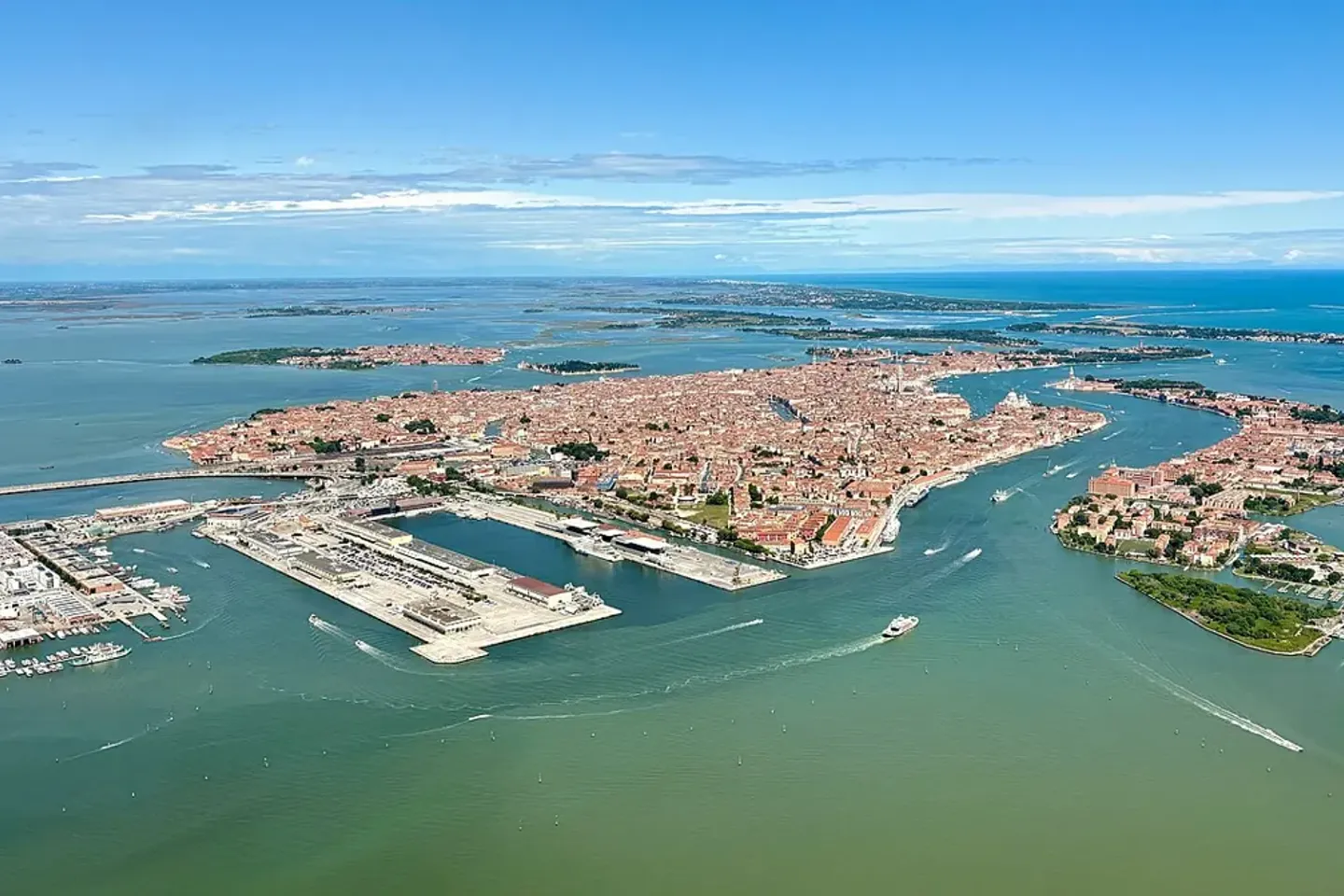
Photo: Venice, Italy. kallerna, CC BY-SA 4.0. Cropped.
Italy’s nomad visa rewards skills, not only income.
Remote employees need EUR 33,000 a year and a qualifying career. Retirees on elective residence need more than EUR 31,000 a year in passive income.
Pages in this story
Italy’s digital nomad visa is for highly skilled workers. A degree helps, and so do three years of professional training or experience. Income alone does not qualify you.
Retirees face a different test. The elective residence visa asks for steady passive income, such as a pension, and bars work.
U.S. dollar conversions are estimates using rates dated Sep 15, 2026. The amount and currency required by the visa office still apply. Rates by Exchange Rate API.
Start with the digital nomad visa
The Italian Embassy in Washington splits the visa in two. Digital nomads are freelancers, consultants and other independent specialists. Remote workers are employees who work fully remotely.
Both need a qualifying profession. The checklist accepts a degree, a higher professional qualification, or at least three years of professional training or experience. You also need at least six months of prior work in your field.
Digital nomad and remote worker visa, Washington checklist
- Remote employees
- Gross salary of at least 33,000 euros (EUR), about US$38,120 a year.
- Freelancers
- Income of at least three times the healthcare exemption level, listed in 2024 as 24,789 euros (EUR), about US$28,635.
- Experience
- At least six months in your field.
- Travel insurance
- At least 30,000 euros (EUR), about US$34,655 in medical cover.
The income must come from the work you will do in Italy. Social Security, rent and stock income do not count toward this visa.
Source: Italian Embassy in Washington, digital nomad and remote worker visa, 2026
Income alone does not qualify you.
After you arrive
You go to the local Questura, the provincial police headquarters, within eight working days to apply for a residence permit. It must be the Questura covering where you live.
The permit is issued for one year. You renew it locally as long as you keep your job, lodging and health insurance.
Source: Italian Embassy in Washington, digital nomad and remote worker visa, 2026
Working here
Local jobs abroad are hard to get, and Italy is no exception. This visa is built for work you bring with you.
The checklist does not say whether you may take Italian clients. Ask the consulate in writing before you sign one. Opening a shop or café is a separate matter with its own permits, and it is outside this visa.
Source: Italian Embassy in Washington, digital nomad and remote worker visa, 2026
Retirement second: elective residence
Elective residence is for people with substantial, steady income that does not come from work. The Boston consulate asks for more than 31,000 euros (EUR), about US$35,810 a year in stable passive income per applicant.
Pensions, annuities and qualifying investment or property income are assessed. Employment income does not count, and you may not work.
Elective residence, Boston consulate
- Income
- More than 31,000 euros (EUR), about US$35,810 a year per applicant.
- What counts
- Pensions, annuities and qualifying investment or property income.
- Work
- Not allowed.
The 31,000 euros (EUR), about US$35,810 figure proves steady means to the consulate. It is not a budget for rent, insurance and flights home.
Health insurance before Medicare
The nomad checklist asks for travel medical insurance of at least 30,000 euros (EUR), about US$34,655 covering medical costs, hospital stays and repatriation. You keep health insurance to renew your permit.
Medicare usually does not cover care outside the United States, and Medicare drug plans do not pay for prescriptions bought abroad. Decide whether to keep Part B for visits home.
Source: Italian Embassy in Washington, digital nomad and remote worker visa, 2026Medicare, travel outside the U.S.
US tax filing still applies
US citizens file a US return every year, wherever they live. An Italian permit does not change that.
Italy taxes its residents too. Ask a tax adviser who knows both countries before you move.
All sources for this story
Read next
Page 1 of 4